
Polish Is Dead. Craft Is Everything.
When AI makes polish cheap, craft becomes the signal.
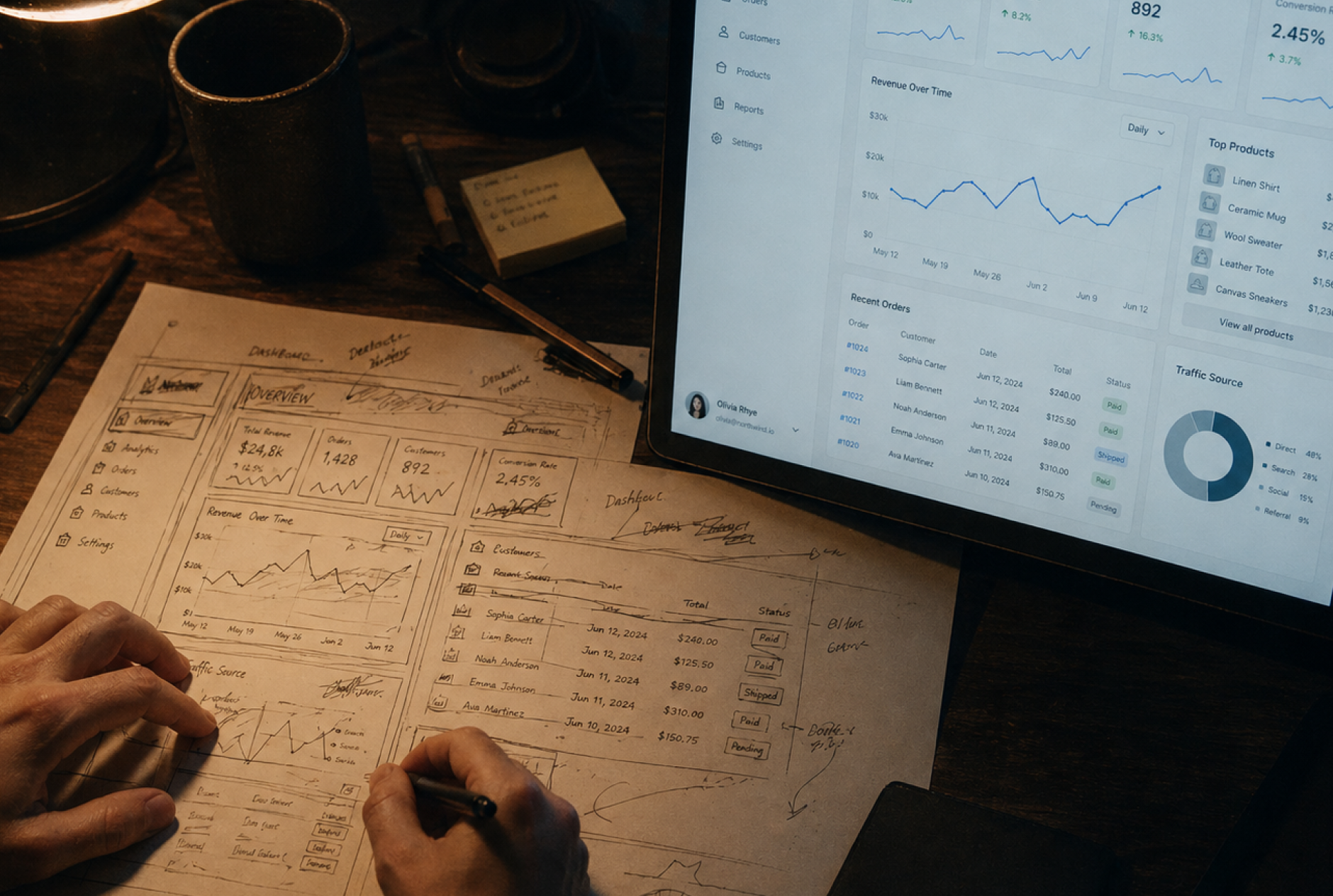
AI can polish anything in minutes.
A rough sketch turns into a pixel-perfect mockup. A messy paragraph gets cleaned up until it sounds like it came out of a brand guide. Clashing colors suddenly match. The rough parts get sanded down. The inconsistencies disappear. Even the awkward bits come out sounding confident.
This is what AI is great at - polish.
When Midjourney could generate a photorealistic image in thirty seconds, photorealism stopped being impressive. When ChatGPT could write a corporate bio in two seconds, generic polish stopped being a differentiator. When generative UI tools could produce a fully styled dashboard in a minute, perfect pixel alignment stopped meaning anything about whether the designer understood the problem.
Polish is the default now. It's free. Unlimited.
So what's actually scarce?
Intention. Imperfection. Evidence of a human who cared enough to break the rules on purpose.
This is not nostalgia disguised as taste. The handmade aesthetic trend you see in packaging, typography, interface design, and brand identity is not people yearning for the past. It is a rational market response. When everything can be technically perfect, technical perfection stops being a signal of quality or care. It becomes commodity output.
What signals care now? Specific choices. Constraints you accepted. A rough edge you left visible because it felt more honest. Typography that doesn't quite fit the grid because the alternative felt wrong. A color that clashes a little because it matched the mood. The imperfection that had to be there.
That's the stuff your audience can feel.
Think about the designer you follow and actually want to keep reading. What makes you want to see what they do next? Is it technically perfect delivery? Or is it a point of view? A specific taste? A willingness to break convention because something was worth breaking it for?
The designers people end up returning to are not always the most technically skilled. They are unmistakably themselves. Specific choices. Short sentences that land hard. Words chosen on purpose. Not the output of a tool optimized for fluency, but the output of a human with a point of view.
For designers, this is good news.
Your value is not in flawlessness, it's in judgment, the ability to see what a product needs and choose to make it that way, even when the alternative is more polished. The discipline to know what matters, and let everything else stay a little rough. Taste.
Taste is the opposite of polish. Taste is knowing which rules to break. Which conventions are worth exploding. Which imperfections are honest, and which ones are just mistakes.
A designer with taste sees a standard button in a design system and decides it needs to be heavier, more dramatic, less friendly. They see a dashboard that could be technically complete and functional and decide it needs to be slightly chaotic, slightly warm, slightly human. They see an app that works perfectly and choose to leave it a little bit broken because broken feels more true.
That's the designer an organization actually wants. Not the one who can produce perfect work, but the one who knows what matters.
The production of polish is commoditizing. The judgment about what deserves polish is becoming more valuable. If you've spent your career proving you can make things perfect, you're competing in the wrong market. If you spend the next year learning to explain why something shouldn't be perfect, why the rule should break, and what becomes possible when you let imperfection say something, you're building a career that AI can't make obsolete.
Trust your specific taste more than technical execution. Share work that shows your thinking, not your rendering skill. Make decisions that are harder to defend than "it's more polished." Explain the imperfections, name what you're doing on purpose.
Your audience wants to see a human in the work, not a perfect tool or an unconstrained machine. Someone with conviction. Someone who knows what matters and has the judgment to let everything else stay rough.
That's the scarce thing now.