
The Future of AI Isn't an App
The most powerful AI experiences won't live in apps. They'll be woven into the moments that matter, invisible, purposeful, and built around what people are actually trying to do.
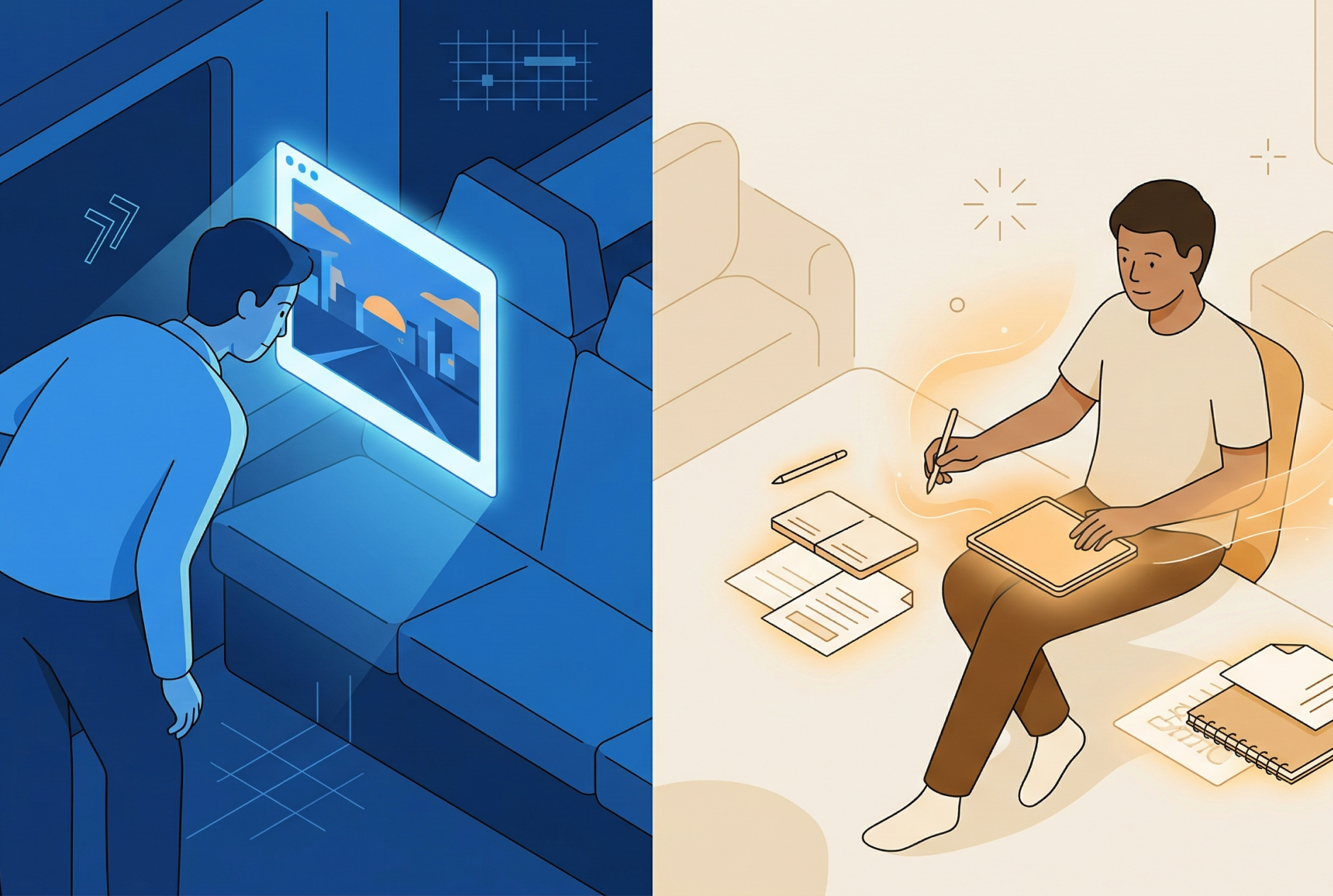
What the interface model should look like instead.
The interfaces that will matter most in the next five years won't look like apps. They'll look like presence: ambient capability that knows what you're doing and responds without being asked to open first.
That's already happening in fragments. GitHub Copilot isn't an app you go to. It's a layer inside your editor. It knows your context. It offers what's useful. It stays out of the way when it's not. That's the model.
The interesting design challenge, and it's largely unsolved, is what it looks like when that model scales beyond code. When your AI layer knows you're in a negotiation and surfaces relevant precedent from your files without you having to ask. When it knows you're building a presentation and generates a structure from your notes before you open a slide deck. When it handles the task so completely in the ambient layer that you never need to switch contexts at all.
That design doesn't happen inside a super-app. It happens at the level of operating environment, browser context, embedded capability. The super-app model actually makes this harder to achieve, because it trains users and developers to think in terms of destinations. The future requires training them to think in terms of intent.
The competitive risk nobody's naming
The companies building deep OS-level and browser-level AI integration are not building super-apps. They're building presence. They're threading capability into the environments users already live in, not building new ones.
If that approach wins, and from a pure design-logic standpoint it should, then the super-app is an expensive detour. An investment in surface area that becomes less relevant as AI moves from destination to ambient layer.
OpenAI has the best models in the world right now. Model quality buys a lot of time and forgiveness for interface decisions. But model quality won't be a permanent differentiator. When the models converge, and they will, interface strategy will matter a lot more than it does today.
The design team at OpenAI is good. The product is good. But the frame it's built inside, "everything in one powerful app," is borrowed from a model of software that AI itself is disrupting.
The most powerful AI company in the world is building an interface that feels like the internet circa 2019. That's either a calculated detour or a blind spot. Either way, the design community should be naming it more clearly than it is.