
The Interface Is Optional Now
The interface isn't going away. It's just stopped being the default assumption. That shift is already changing what design teams are asked to do — and most haven't noticed yet.
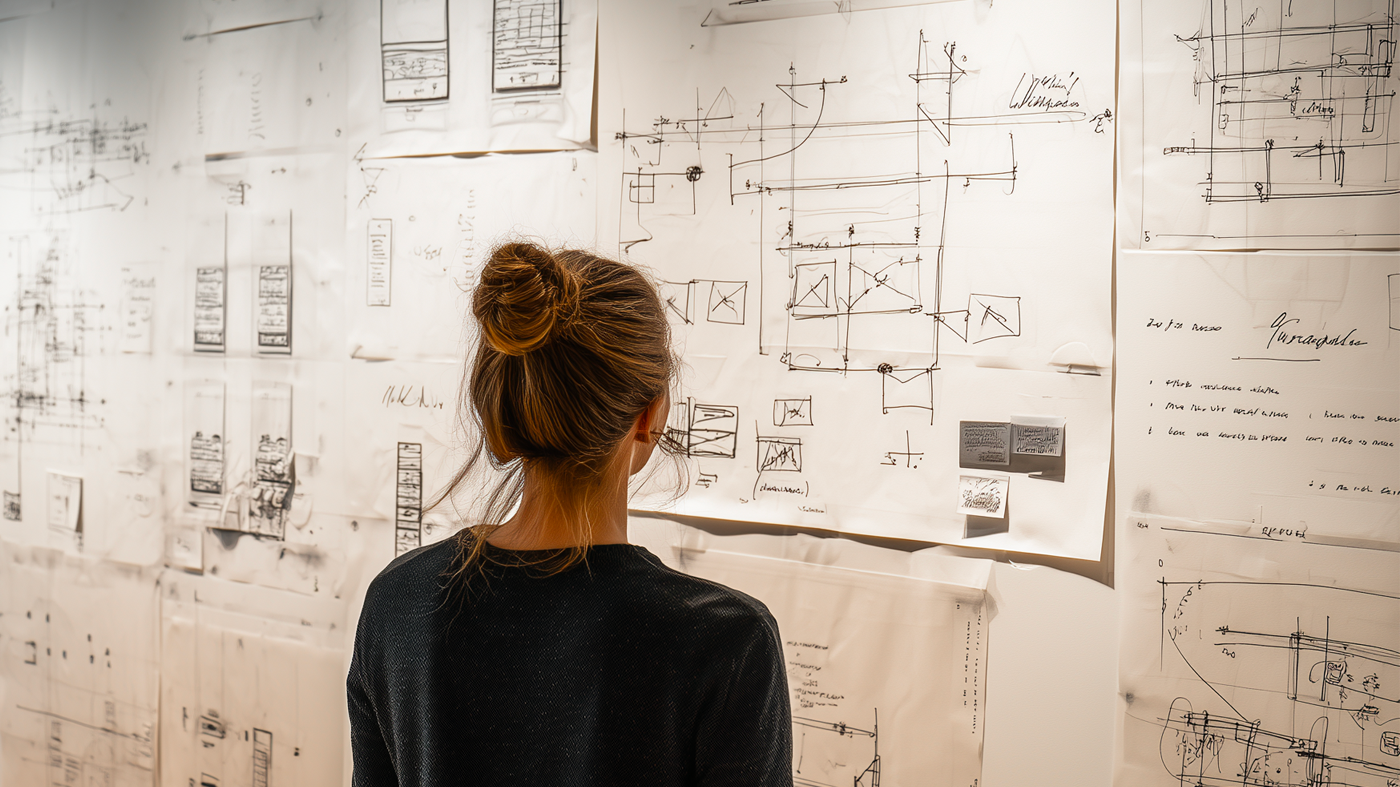
Something is shifting
Something is shifting in how design teams talk about their work. Not in the thinking, but in what they can actually build.
Designers have always thought in journeys, not screens. End to end. Interaction to interaction. The frustration of the job, for as long as I can remember, has been that the thinking doesn't fit the deliverable. You map the full experience. You hand off a screen.
That gap is closing.
The interface was the constraint
The interface was never the point. It was the constraint.
We built for screens because screens were the only viable surface. There was no other way to mediate between a human and a system that couldn't understand language, infer context, or adapt to what was actually happening. The interface was the best available answer to a specific technical problem.
Designers knew this. The work of journey mapping, service design, experience blueprinting, that's not new thinking. It's a decade-plus of the field trying to make the full picture legible, even when only a portion of it could be built.
Those technical constraints are dissolving now. And what's opening up isn't a new way of thinking. It's finally a way to build what designers have been describing all along.
The pattern that is becoming buildable
What's worth watching isn't a better generation of interfaces. It's a shift in what can actually ship.
The pattern emerging is experiences that spin up on demand for a specific problem. Pull in the context and integrations they need. Solve it. Disappear. No persistent app. No onboarding. No saved state. The experience knows why it exists, and it's gone when the job is done.
That's not a new design concept. Service designers have been drawing versions of this for years. What's new is that it's buildable.
Tools are the wrong frame
The conversation in design right now is mostly about tools. How do I use AI in my workflow? How do I prototype faster? How do I keep generative output consistent with my design system?
These are legitimate questions. But they're still aimed at the screen.
Getting really good at AI-assisted design workflow right now is like finally getting the tools to execute on the vision, and then using them to make the same thing faster. Useful. But it misses what's actually available.
The question teams are not organized around yet
The more important question, the one most teams aren't organized around yet, is this:
Now that we can build the experience designers have always described, what does that change about how we work?
The deliverable shifts. That's the real disruption.
When the deliverable becomes the outcome
For a long time, design's output was a screen, or a set of screens, or a system of screens. The thinking was always bigger. The handoff was always smaller. And somewhere in that gap, the full experience got approximated.
Now the deliverable can be the outcome. Getting from need to resolution, in the most direct, contextually aware way possible, without forcing it through a UI if a UI isn't what the problem needs. Sometimes that's a screen. Sometimes it's a conversation. Sometimes it's a background process the user never sees.
Designers already know how to think this way. Most of them have been thinking this way for years. What changes is that the organizations they work in, and the products they're building, now have to catch up.
Screens are not dead, but the ceiling is rising
Screens aren't dead. Most of what gets built will still be screen-based for a long time. The world is full of products that need visual hierarchy, information architecture, intentional interaction design. None of that goes away.
What changes is the ceiling. Designers who have spent years doing journey work, service design, end-to-end experience thinking, that work now has a path to production it didn't have before. The translation loss is smaller. The gap between the blueprint and the thing that ships is narrowing.
The designers who will struggle aren't the ones who thought too narrowly. They're the ones who stayed close to the canvas when the canvas became optional.
The new start question
This doesn't require a new way of thinking. Most experienced designers are already there.
It requires a different question at the start of every project, directed not just at the designer, but at the team.
Not: What screens do we need to build?
But: What is the minimum viable experience that solves this problem, and what form does it naturally take?
Sometimes the answer is a screen. Sometimes it isn't. Getting the whole team, product, engineering, leadership, comfortable with answers that don't look like a traditional deliverable is the actual work ahead.
Designers have been describing this future for years.
It's just starting to become buildable.